
The Moment You Notice It
You're standing in the garage listening to the weather radio, and a gust rattles through outside. The door flexes—just slightly, but enough that you see daylight flicker at the edges of the track. Maybe it's a low groan from the panels, or a shudder you feel through the floor more than hear. That small flex is your garage door telling you something: it's built to open and close, not necessarily to hold back sustained wind pressure.
Late fall still falls inside storm season for this part of Florida, and afternoon squalls can turn into something stronger with little warning. If your garage door hasn't been checked since last year, now is the window to do it—before the next system is on the radar instead of in the forecast.
Why the Garage Door Is the Weakest Wall
A standard exterior wall is a solid, braced structure. A garage door is a large moving panel held in place by tracks, rollers, hinges, and a spring system—none of which are designed to resist the kind of pressure a sustained 60-80 mph wind puts on a flat surface that size. When wind gets under a door that isn't rated for it, the door can bow, buckle, or blow in entirely. Once that happens, wind pressure inside the garage pushes up against the roof decking from underneath, which is how a lot of roof damage actually starts in storms—not from the roof itself failing first, but from the garage door failing and the pressure having nowhere to go but up.
That's the part most homeowners don't think about until someone explains it: the garage door isn't just a convenience item, it's a structural component during a storm. If it fails, the failure doesn't stay contained to the garage.
What Makes Coastal Doors More Vulnerable
- Salt air corrosion: Hardware near the coast corrodes faster than inland installations. Rusted hinges, track bolts, and spring anchors lose holding strength well before they look obviously broken.
- Humidity swelling: Wood-composite and some steel-faced doors can swell slightly in track channels during humid stretches, which changes how evenly the door sits and seals.
- Age of weatherstripping: Rubber seals around the bottom and sides harden and crack in heat and sun, which lets wind-driven rain in long before a full structural failure happens.
A Pre-Storm Inspection You Can Do This Weekend
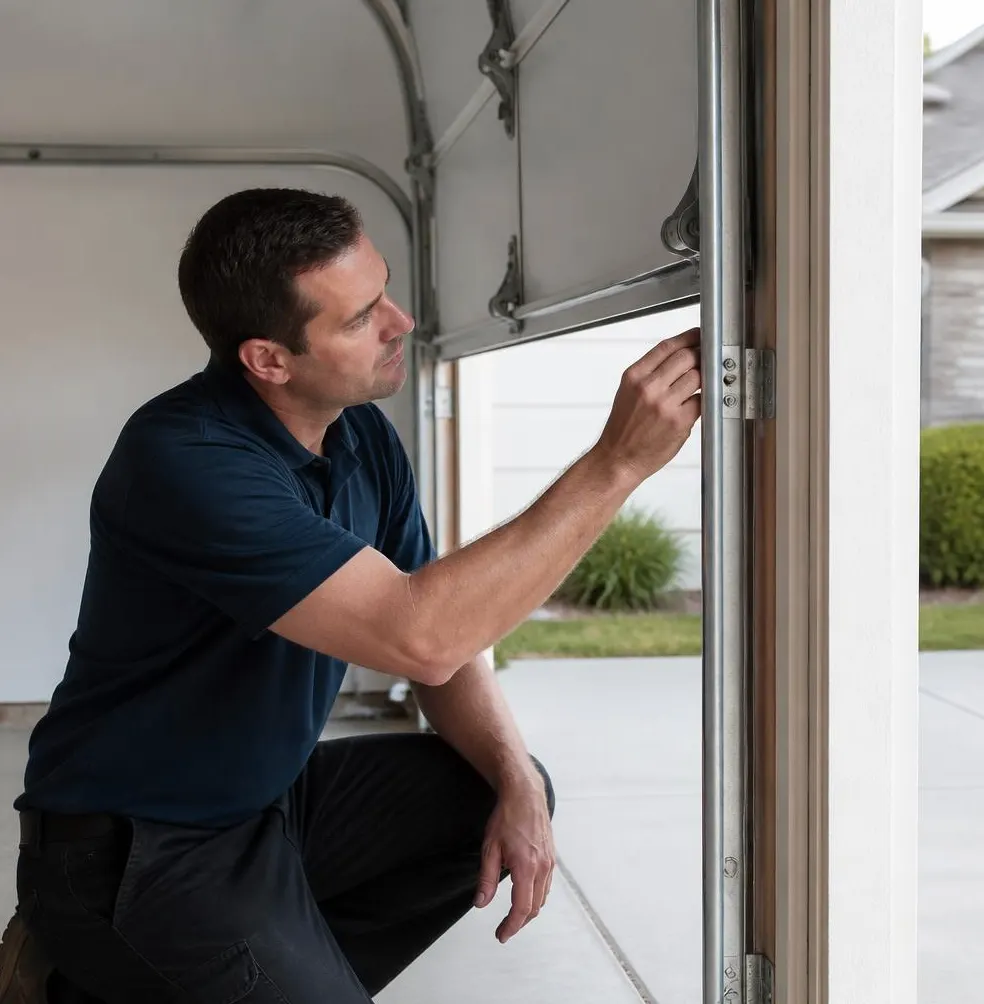
- Check the track-to-wall attachment. Tracks should be bolted firmly, with no visible play when you push on them by hand. Loose brackets are one of the most common failure points in wind events.
- Inspect hinges and rollers for rust. Surface rust on the door skin is cosmetic; rust on hinges, roller stems, or the track itself is a sign the hardware is losing strength and may need replacing, not just lubricating.
- Test the door balance. Disconnect the opener (pull the release cord) and lift the door halfway by hand. It should stay in place. If it drifts up or crashes down, the springs are out of balance and under uneven load—exactly the kind of stress that compounds during wind events.
- Look at the bottom seal. Cracked or flattened weatherstripping should be replaced before storm season, not after a door has already taken on water.
- Check for horizontal bracing. Many older doors, especially ones installed before current wind-load standards were common, don't have the horizontal struts that newer wind-rated doors use to stiffen panels against pressure.
Reinforcement Options Worth Knowing
If your door is older or shows signs of flex in wind, there are a few paths, each with trade-offs:
- Retrofit bracing kits add horizontal struts to an existing door. This is the lower-cost option (often a few hundred dollars in parts and labor, depending on door size) and can meaningfully stiffen a panel, but it doesn't change the door's rating if the track and hardware underneath are already weak.
- Wind-rated replacement doors are engineered as a system—reinforced panels, heavier tracks, reinforced end hinges—built to a tested pressure rating. This costs more upfront, generally in the low-to-mid thousands depending on size and materials, but it's the option that actually changes how the door performs in a serious event rather than just reinforcing an aging structure.
- Impact-rated opener upgrades matter less for wind pressure and more for debris strikes, but they're worth pairing with a reinforced door if you're already investing in an upgrade.
After the Storm Passes
Once the wind dies down, don't just assume the door is fine because it still opens and closes. Check for new gaps at the corners, listen for grinding when it moves, and look at the tracks for any bending that wasn't there before. A door that took on wind load even without failing can come out of alignment in ways that aren't obvious until a spring or cable gives out weeks later.
When to Call Anna Maria Garage Door Service
If your inspection turns up rusted hardware, a door that won't hold its balance, or you're not sure whether your current door has any wind bracing at all, that's the point to bring in a technician rather than guess. Anna Maria Garage Door Service handles both Garage Door Tune-Up & Maintenance for doors that just need hardware replaced and rebalanced before storm season, and Garage Door Installation & Replacement for homeowners ready to move to a wind-rated door built for coastal conditions. We'll check the full system—track, springs, hinges, bottom seal—and tell you honestly whether reinforcement or replacement makes more sense for your door and your budget.
If you're anywhere in Anna Maria, Holmes Beach, Bradenton Beach, or the surrounding Manatee County area and want your garage door checked before the next storm rolls in, call Anna Maria Garage Door Service today to schedule an inspection.