
The Short Answer
A garage door that won't open is almost always one of six things: no power to the opener, a misaligned safety sensor, a broken spring, a snapped cable, a roller off its track, or the trolley disconnected from the opener carriage. A technician checks them in that order, starting with the fastest and safest to rule out and ending with the ones that take tools and experience to fix. On Anna Maria Island, heat, salt air, and afternoon storms push a few of these causes to the front of the line more often than in drier inland areas.
What the Symptoms Usually Mean
Before any tool comes out, the symptom tells you where to start looking.
- Opener hums or clicks but the door doesn't move — usually a spring or cable problem; the motor is trying but doesn't have help from the spring, or the cable that pulls the door has let go.
- Nothing happens at all — no light, no sound, no motor noise — points to power: a tripped breaker, a dead outlet, or an opener that's lost its connection after a storm-related outage.
- Door opens a few inches, then reverses or stops — classic safety-sensor behavior, especially if the opener's wall console is blinking an error light.
- Door won't budge even when you try to lift it by hand — a strong sign of a broken spring; the spring normally carries most of the door's weight, and without it the door can feel like it weighs twice as much.
- Door opens manually but the remote and wall button do nothing — often a disengaged trolley, meaning the emergency release cord got pulled or bumped.
The Order a Technician Checks It
1. Power to the opener
First check: is the unit plugged in, and is the breaker tripped? Afternoon storms during hurricane season cause brief power blips that can trip a GFCI outlet or reset an opener's logic board. This takes thirty seconds to check and rules out the simplest cause before touching anything mechanical.
2. Safety sensors
Every modern opener has two photo-eye sensors near the floor on each side of the track. If they're misaligned, dirty, or blocked, the opener refuses to close or open the door and usually blinks a light to say so. Coastal humidity causes condensation on the lenses, and storm debris or a bumped bike can knock a sensor out of alignment. The fix is realigning or wiping down the sensors — quick, but easy to miss if you don't know to look.
3. A broken spring
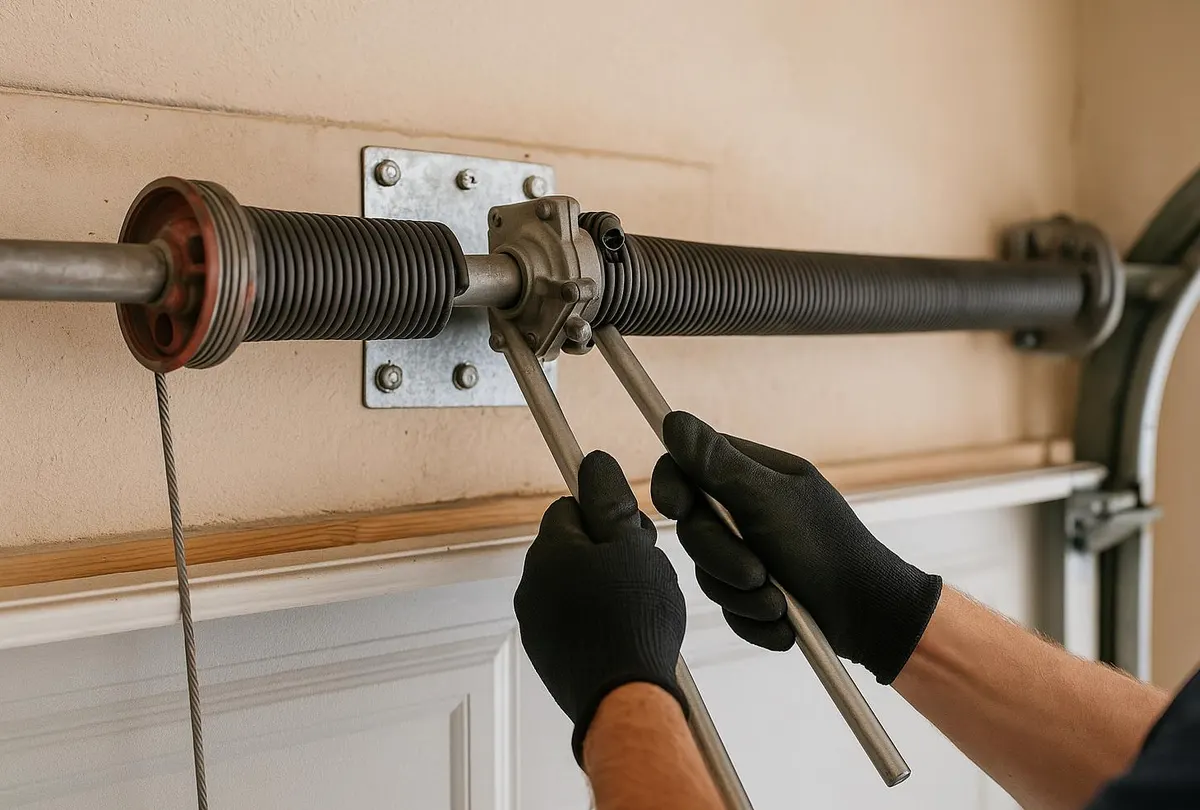
This is the most common reason a door won't open at all, especially on older doors. Torsion springs (mounted above the door) and extension springs (stretched along the upper tracks) wear out from thousands of open-close cycles, and the stress is higher in homes that run air conditioning constantly and open the garage often in summer heat. A snapped torsion spring sometimes makes a loud bang you can hear from inside the house. A technician checks for a visible gap in the coil and tests how heavy the door feels when lifted manually — a door that won't stay up on its own confirms it. Spring replacement is not a DIY job; torsion springs are under high tension and need the right tools and technique.
4. A snapped or frayed cable
The cables run alongside the springs and help guide the door evenly. A broken or frayed cable usually shows up as a door that hangs crooked, with one side higher than the other, or a door that moves a few inches then jams. Salt air speeds up corrosion on cable strands near the coast, so these tend to wear faster here than inland. Replacement means removing tension from the system safely and re-threading new cable through the drum.
5. Off-track rollers or a bent track
If a roller has jumped the track or the track itself is bent, the door will visibly bind on one side. Humidity causes wood-framed doors and jambs to swell, which can push a track slightly out of alignment over time, and storm winds can rack a track if the door was impacted by debris. The fix ranges from re-seating a roller to straightening or replacing a section of track.
6. Disengaged trolley or lock
Last on the list because it's the easiest to miss and the easiest to fix: the red emergency release cord may have been pulled (sometimes accidentally during storm prep when people manually secure a door) or a manual slide lock may be engaged from vacation mode. Reconnecting the trolley or releasing the lock takes a minute once it's found.
When to Call Anna Maria Garage Door Service
If the door won't budge, feels unusually heavy, or hangs crooked, stop trying to force it — that's spring or cable territory, and attempting it yourself with a torsion spring under tension is genuinely dangerous. Call us for Garage Door Spring Repair or Garage Door Cable Repair and we'll diagnose it on-site, replace the failed part with coastal-rated hardware, and test the full cycle before we leave. If the door is visibly off its track or binding on one side, our Off Track Door Repair service gets it re-seated and running smoothly the same visit.
If your garage door in Anna Maria, Holmes Beach, Bradenton Beach, or anywhere on Manatee County's coast won't open, give Anna Maria Garage Door Service a call — we show up on time and fix it right the first time.